
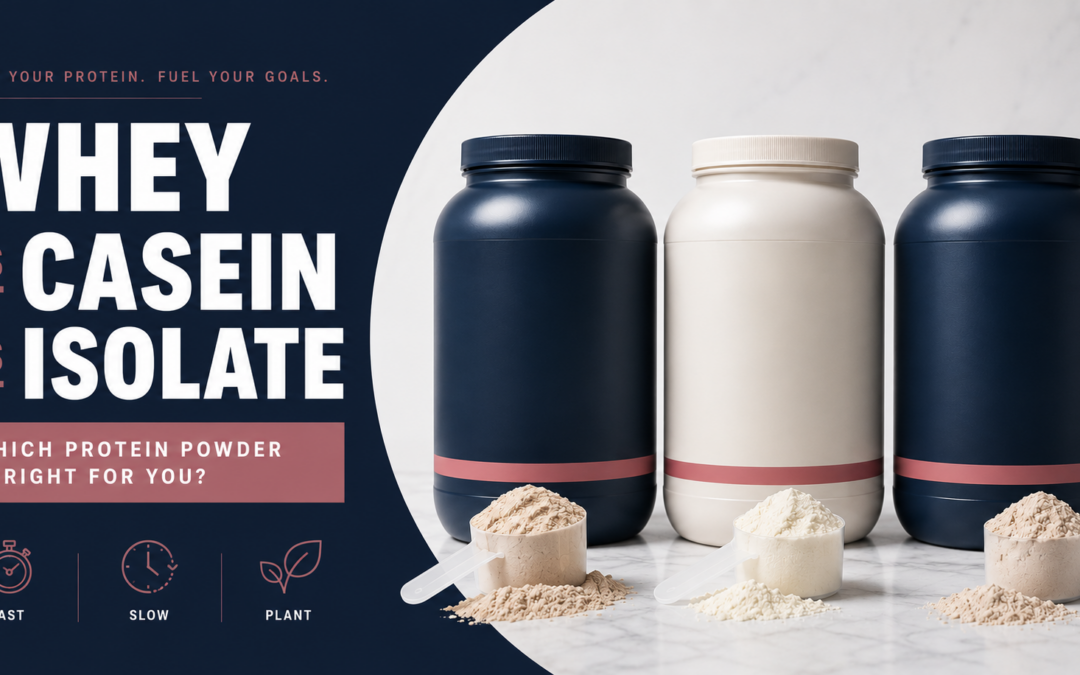
| KEY TAKEAWAYS |
|
Everything you need to know before you read further: • All three build muscle. Whey concentrate, whey isolate, and casein all deliver a complete amino acid profile. No option is ineffective; the differences are about timing, digestibility, and cost. • Whey concentrate is the everyday workhorse. Most cost-effective, well-researched, and suitable for the majority of people training without lactose sensitivity. • Whey isolate is leaner and lower in lactose. Best for post-workout use, calorie-controlled cutting phases, or anyone who experiences bloating with concentrate. Costs £5–10 more per kg. • Casein is the pre-sleep specialist. Its 5–7 hour digestion window makes it uniquely effective for overnight muscle recovery. It does not replace whey, it complements it. • Total daily protein matters most. Research consistently shows that total daily intake (1.6–2.2g per kg bodyweight) is the primary driver of muscle growth. Protein type affects timing and tolerability, not overall effectiveness. • Not sure where to start? Go with whey isolate. It covers the most scenarios — post-workout, cutting, and lactose sensitivity — and is the safest all-purpose choice if you only want one protein powder. |
| IN THIS GUIDE |
|
1. What protein powder actually is — and what it is not 2. Whey concentrate: the everyday workhorse 3. Whey isolate: leaner, faster, lower lactose 4. Casein: the slow-release night-time option 5. Full comparison table: protein %, speed, price, and best use 6. Plant-based protein: does it work as well? 7. Common mistakes people make when choosing protein powder 8. The decision guide: which type is right for your situation 9. 8 FAQs answered |
Whey concentrate, whey isolate and casein can all help build muscle, but they differ in digestion speed, lactose content, protein percentage and price.
Protein powder is one of those supplement categories where the choice genuinely matters — not because any option is dramatically better than another, but because the differences between them are meaningful depending on your goals, your digestion, your budget, and when you are using it.
The three most common forms you will encounter in the UK market are whey concentrate, whey isolate, and casein. They all come from cow’s milk, they all provide a substantial dose of protein per serving, and they all have solid research supporting their effectiveness. The question is not which one is best in an absolute sense — it is which one is best for your specific situation.
This guide breaks down exactly what each protein type is, how it is processed, how it differs nutritionally, and which situations it is genuinely best suited to. By the end, you will be able to make a clear, confident decision without needing to wade through contradictory forum posts or rely on brand marketing.
- Choose whey concentrate if you want the best all-round option for muscle growth and value.
- Choose whey isolate if you’re lactose sensitive, cutting calories, or want maximum protein per serving.
- Choose casein if you want a slow-release protein before bed or between long gaps without food.
Why Protein Type Actually Matters
Protein powder is not a magic muscle-building compound. It is a processed, concentrated food product designed to make hitting a daily protein target more convenient than cooking six high-protein meals from scratch. Nothing in a protein shake stimulates muscle growth independently — it is the amino acids it delivers, particularly leucine, that prompt muscle protein synthesis when combined with resistance training.
Whole food sources — chicken, eggs, Greek yoghurt, tuna — remain the foundation of any effective nutrition plan. Protein powder fills the gap when whole food is not practical: between meals, immediately post-training when you do not have time to cook, or as a simple way to add 25–30g of protein to breakfast without adding significant calories from fat or carbohydrate.
Different protein types affect three things: digestion speed, the timing of amino acid delivery to muscle tissue, and tolerability for people with lactose sensitivity. With that framing in place, the differences between protein types become much clearer: you are not choosing between effective and ineffective options. You are choosing between tools that each serve a slightly different purpose.
Whey Protein Concentrate: The Everyday Workhorse
What it is
Whey is the liquid by-product of cheese production — it separates from the curds during the cheesemaking process and is then filtered and dried into powder. Concentrate is the least processed form: it typically contains 70–80 per cent protein by weight, with the remaining 20–30 per cent made up of fat, carbohydrates (primarily lactose), and micronutrients.
Nutritional profile
A typical 30g serving of whey concentrate delivers approximately 22–24g of protein, 3–5g of carbohydrates, and 2–4g of fat, with a calorie count in the range of 120–140kcal. The lactose content is meaningful — around 3–5g per serving — which is relevant for those with lactose sensitivity.
Absorption speed
Whey is classed as a fast-digesting protein. Amino acid levels in the bloodstream begin rising within 60 minutes of ingestion and peak at around 90 minutes before declining. This rapid absorption profile makes it particularly useful around training — the quick delivery of amino acids aligns with the window of elevated muscle protein synthesis that follows a resistance training session.
Best for
Whey concentrate is the most cost-effective protein powder on the market and suits the majority of people training for muscle growth, strength, or general fitness. It delivers everything you need — a high-quality complete protein with a strong leucine content — at a lower price per gram than isolate or casein. If you are not lactose sensitive and you are not in an aggressive calorie deficit, concentrate is an excellent daily option.
Whey Protein Isolate: The Leaner, Faster Option
What it is
Whey isolate is produced by filtering whey concentrate further — most commonly through cross-flow microfiltration or ion exchange — to remove more of the fat and lactose. The result is a powder that typically contains 90 per cent or more protein by weight, with minimal fat (usually under 1g per serving) and very low lactose.
Nutritional profile
A typical 30g serving delivers 25–27g of protein, under 1g of fat, and 1–2g of carbohydrates, coming in at approximately 110–120kcal. It is leaner, calorie-for-calorie, than concentrate, and the near-negligible lactose content means it is far better tolerated by people with lactose sensitivity.
Absorption speed
Whey isolate digests slightly faster than concentrate due to its lower fat content — fat slows gastric emptying. The practical difference in absorption speed between concentrate and isolate is modest, and both are meaningfully faster than casein. Research does not support the idea that isolate’s marginally faster absorption produces significantly better muscle protein synthesis outcomes compared to concentrate when total daily protein intake is matched.
Best for
Whey isolate is the smart choice in three scenarios: if you are lactose sensitive and experience bloating or discomfort with concentrate; if you are in a calorie deficit and want maximum protein per calorie with minimal fat; or if your post-workout window is tight and you want the fastest-digesting option available. The cost premium over concentrate is typically £5–10 per kilogram at UK retail prices — worth it if any of those three situations apply to you.
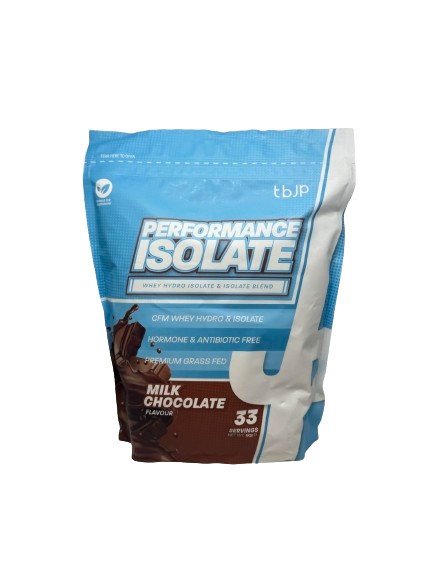
FEATURED PRODUCTTrained by JP Performance Isolate (Milk Chocolate 1000g) |
Casein Protein: The Slow-Release Night-Time Option
What it is
Casein accounts for approximately 80 per cent of the protein in cow’s milk, with whey making up the remaining 20 per cent. Unlike whey, casein forms a gel in the acidic environment of the stomach, which significantly slows its digestion and the release of amino acids into the bloodstream. Where whey peaks and clears in 90–120 minutes, casein sustains elevated amino acid levels for five to seven hours.
Nutritional profile
A typical 30g serving of micellar casein (the standard form) delivers 22–25g of protein, 1–3g of fat, and 2–4g of carbohydrates at approximately 110–130kcal. Casein is naturally thicker than whey — it often mixes to a pudding-like consistency when made with less liquid, which some people enjoy as a filling dessert-style protein hit.
The overnight recovery evidence
Casein’s defining characteristic is its slow, sustained amino acid release. This is particularly valuable during the overnight fast — the longest period most people go without eating — when muscle protein breakdown (catabolism) can outpace synthesis in the absence of dietary protein.
A well-cited 2012 study published in Medicine and Science in Sports and Exercise (Res et al., PMC4008985) found that consuming 40g of casein protein before sleep significantly increased muscle protein synthesis rates overnight compared to placebo, and that these gains contributed to improved strength and muscle mass over a 12-week training period. Casein consumed before bed essentially gives your muscles a sustained supply of amino acids during the hours when you are not eating.
Best for
Casein is best used as a pre-sleep protein source, not as a direct replacement for whey. Taking 30–40g of casein 30–60 minutes before bed is one of the most evidence-backed ways to maximise overnight recovery and muscle protein synthesis. It is also useful as a slow-release option during long gaps between meals — the thick consistency and slow digestion make it significantly more filling than whey.
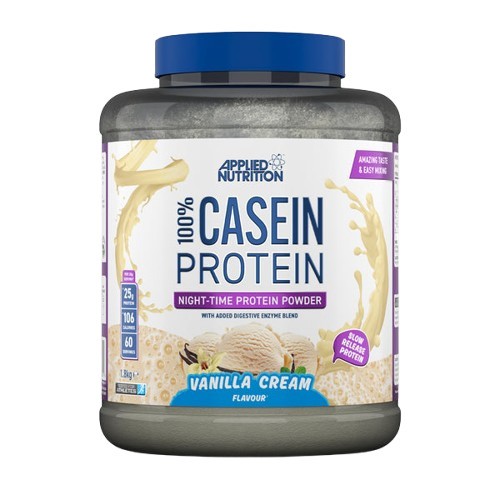
FEATURED PRODUCTApplied Nutrition 100% Casein Protein
A slow-digesting micellar casein delivering 22–25g of protein per serving with a thick, creamy consistency. Designed to release amino acids steadily over five to seven hours — making it the ideal pre-sleep protein for overnight muscle recovery. Available in Chocolate Cream, Strawberry Cream, and Vanilla in both 900g and 1800g sizes. → Shop Applied Nutrition 100% Casein Protein at iwant2be.co.uk |
Whey Concentrate vs Isolate vs Casein: Full Comparison
To summarise the differences across the five most relevant factors for UK gym-goers:
| Factor | Whey Concentrate | Whey Isolate | Casein | Plant (Pea+Rice) |
| Protein % | 70–80% | 90%+ | 75–80% | 75–85% |
| Digestion speed | Fast (60–90 min) | Fast (45–75 min) | Slow (5–7 hours) | Moderate |
| Lactose | 3–5g per serving | Under 1g per serving | Moderate | None |
| UK price/kg | £15–28 | £25–40 | £25–38 | £20–35 |
| Best use case | Daily training, budget | Post-workout, cutting, lactose sensitivity | Pre-sleep, satiety | Vegan/vegetarian diet |
| Complete amino acids? | Yes | Yes | Yes | Yes (in blend) |
What About Plant-Based Protein Powders?
Plant-based protein powders — most commonly pea protein, rice protein, or blends of the two — are a legitimate alternative for those following vegetarian or vegan diets, or for anyone who experiences persistent digestive issues with all dairy-based proteins.
The historical concern with plant proteins was their amino acid profile. Individual plant protein sources tend to be low in one or more essential amino acids — pea protein is low in methionine, rice protein is low in lysine. Neither alone matches the complete amino acid profile of whey or casein.
However, a well-formulated pea-and-rice blend corrects these individual shortfalls. A 2019 study in the Journal of the International Society of Sports Nutrition (Banaszek et al., PMC6358922) found that a rice and pea protein blend produced equivalent increases in lean mass, strength, and muscle thickness compared to whey protein over an eight-week resistance training programme when total protein intake and leucine content were matched.
The key qualifier: plant proteins typically require slightly larger servings to match the leucine content of whey.
For omnivores without digestive issues, whey remains the more convenient choice. For plant-based eaters, a quality pea-rice blend at 30g or above per serving is a fully viable alternative — not a compromise.
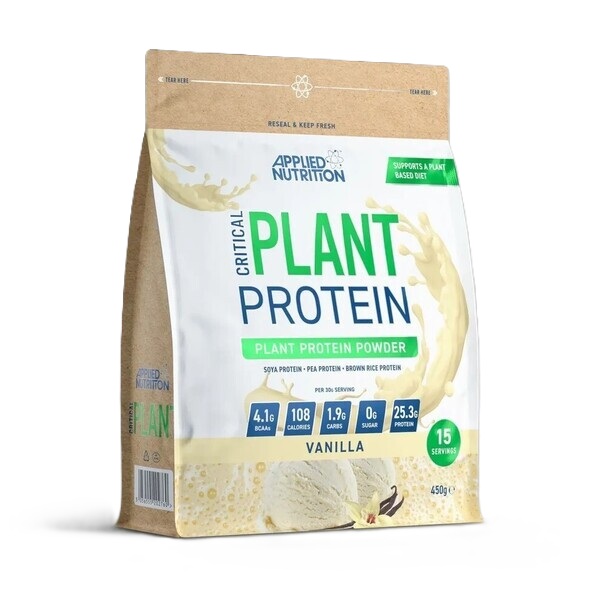
FEATURED PRODUCTApplied Nutrition Critical Plant Protein
A pea and rice protein blend delivering a complete amino acid profile without any dairy. Ideal for vegans, vegetarians, or anyone who experiences persistent digestive issues with whey. Available in Chocolate, Strawberry, and Vanilla in both 450g and 1800g sizes — with the 450g being a great low-cost entry point to try before committing to a larger bag. → Shop Applied Nutrition Critical Plant Protein at iwant2be.co.uk |
WHAT ABOUT PROTEIN BLENDS?
Walk into any UK supplement retailer and you will find a third category sitting alongside the single-source options: blended proteins. These products typically combine whey concentrate and whey isolate, or mix whey with casein, and are marketed as offering the “best of both worlds” so both fast and slow release in a single serving.
The reality is more straightforward. A blend is not inherently better than a single-source protein. What matters is the ratio. A product that is predominantly concentrate with a small amount of isolate added is still, functionally, a concentrate but may be priced like an isolate. Always check the protein percentage per 100g on the label rather than relying on the product name.
Where blends do offer genuine value is in convenience: a whey-casein blend taken post-workout delivers both an immediate amino acid spike and a sustained release over the following hours, without needing two separate products. If you train in the evening and want overnight recovery support without a separate casein shake before bed, a quality blend is a practical option worth considering.
| 5 COMMON MISTAKES WHEN CHOOSING PROTEIN POWDER |
|
Avoid these before spending a penny: • Overthinking protein type and underthinking total intake. The research is consistent: hitting 1.6–2.2g of protein per kg of bodyweight per day matters far more than whether you’re using isolate vs concentrate. Nail total intake first, then optimise type. • Buying casein to use post-workout. Casein’s slow release is a disadvantage immediately after training, where you want a fast amino acid spike. Use whey post-workout; save casein for before bed. • Assuming isolate is always better. If you’re not lactose sensitive and not in a calorie deficit, the extra £5–10 per kg for isolate delivers no meaningful muscle-building advantage over concentrate. • Choosing based on price per tub rather than price per gram of protein. A cheaper 1kg bag at 70% protein gives you 700g of protein; a pricier 1kg bag at 90% gives you 900g. Check the protein percentage on the nutrition label — this is the real cost comparison. • Buying ‘proprietary blends’ without checking what’s in them. Some premium-priced blends mix isolate, concentrate, and casein together. Unless the ratio is disclosed, you’re paying isolate prices for what might be mostly concentrate. Check protein percentage per 100g first. |
| WHICH PROTEIN POWDER IS RIGHT FOR YOU? |
|
Match your situation to the right choice: • Training for muscle growth, no digestive issues, standard budget → Whey concentrate as your daily protein. Use it post-workout and between meals. Covers everything you need at the best cost per gram. • Lactose sensitive or in an aggressive calorie deficit → Whey isolate. The lactose reduction is meaningful, the protein-to-calorie ratio is the best of the three, and the faster absorption makes it the cleanest post-workout option. • Want to maximise overnight recovery or manage hunger between meals → Add casein. It does not replace your daily whey use — it complements it. 30–40g before bed is one of the most evidence-backed and underused strategies in everyday strength training. • Following a vegan or vegetarian diet → A quality pea-rice protein blend at an adequate dose. Check the label for leucine content and aim for at least 2.5g leucine per serving. • Unsure where to start → Whey isolate. It is the most versatile of the three — suitable for post-workout use, calorie-conscious eating, and most digestive sensitivities. |
Frequently Asked Questions
Is whey isolate better than concentrate for building muscle?
Not meaningfully, when total daily protein intake is matched. Both types deliver a high-quality complete protein with an excellent leucine content. Isolate has a marginally higher protein percentage per gram and lower lactose, which matters in specific situations — but if you are not lactose-sensitive and are not restricting calories aggressively, concentrate delivers equivalent muscle-building results at a lower price.
Should I take whey or casein after a workout?
Whey. The post-workout period benefits from a fast-digesting protein that rapidly elevates plasma amino acid levels and stimulates muscle protein synthesis. Casein’s slow release is not well-suited to this purpose. Save casein for the pre-sleep window where its sustained amino acid release provides the most benefit.
Can I take both whey and casein?
Yes, and for serious strength athletes this is a common approach. Whey post-workout and casein pre-sleep is the most evidence-supported combination. It maximises both the acute post-exercise muscle protein synthesis response and overnight recovery. There is no interaction concern — they are simply two protein types used at different times for different purposes.
Is protein powder bad for your kidneys?
No, in healthy individuals. This concern originates from research in people with pre-existing kidney disease, where high protein intake can accelerate kidney stress. For healthy adults without kidney conditions, multiple long-term studies have found no adverse renal effects from protein supplementation at doses relevant to training — up to 2.2g per kilogram of bodyweight per day. If you have existing kidney concerns, speak with your GP before increasing protein intake significantly.
How much protein powder should I take per day?
Protein powder is a supplement, not a meal replacement — use only as much as you need to meet your daily protein target through a combination of whole food and supplementation. For most people training 3–5 times per week, one to two servings per day is sufficient to bridge the gap between dietary protein and their 1.6–2.2g per kilogram daily target. See our full protein guide for detailed calculations: /blog/how-much-protein-to-build-muscle-uk/
What is the difference between whey isolate and hydrolysate?
Whey hydrolysate is isolate that has been enzymatically pre-digested into smaller peptides, which absorb slightly faster. It is the most expensive form of whey and is primarily used in clinical nutrition and in situations where the fastest possible digestion is required. For most gym-goers, the marginal speed advantage over standard isolate does not justify the significant price premium. Isolate remains the practical choice.
Does protein powder cause bloating?
Bloating from protein powder is almost always caused by lactose — found in higher amounts in concentrate — rather than by the protein itself. If you experience bloating with whey concentrate, switching to a whey isolate (which is very low in lactose) typically resolves the issue. If bloating continues with isolate, a lactose-free plant-based protein is the next step.
Is it worth paying more for a premium protein powder?
It depends on what the premium is paying for. Extra cost justified by a higher protein percentage per gram, independent third-party testing (look for Informed Sport or Informed Choice certification), or a specific form (isolate vs concentrate) is worth evaluating. Extra cost driven purely by branding, elaborate flavour systems, or marketing claims about proprietary blends is generally not. Check the protein percentage per 100g on the label — this single figure tells you more about value for money than the front-of-pack marketing ever will.
Is Whey Isolate worth the extra money?
For most people, it depends on two things: lactose tolerance and current goals. If you experience bloating or digestive discomfort with whey concentrate, isolate is absolutely worth the extra £5–10 per kilogram — the near-negligible lactose content typically resolves the issue entirely. If you are in a calorie deficit and want maximum protein per calorie with minimal fat, isolate’s leaner nutritional profile justifies the cost difference. If neither situation applies to you — you tolerate concentrate well and are not restricting calories — the honest answer is no, the extra cost does not produce meaningfully better muscle-building results when total daily protein intake is the same.
Can women use Whey Protein?
Yes, completely. Whey protein is simply a food-derived protein source — there is nothing in it that is specific to male physiology. Women training for muscle tone, strength, or general fitness have exactly the same daily protein requirements relative to bodyweight (1.6–2.2g per kg) as men, and the same options apply: concentrate for everyday use and value, isolate for lower lactose and fewer calories per serving, casein before bed for overnight recovery. The only consideration worth noting is that women tend to have lower total calorie targets, which makes isolate’s higher protein-to-calorie ratio slightly more relevant — but it is a preference, not a requirement.
Continue Reading: More Guides from the Stronger & Leaner Hub
Protein powder is one tool in a complete approach. These guides cover the rest of the picture:
- How Much Protein Do You Actually Need to Build Muscle?
- Creatine Loading: Does It Work? The Evidence-Based Answer
- Best Pre-Workout Supplements UK: What the Ingredients Actually Do
For the complete guide to building strength and lean muscle the smart way, visit the Stronger & Leaner hub
Browse the full Stronger & Leaner supplement range at iwant2be.co.uk