
|
Key Takeaways • Most lifters should consume 1.6–2.2g protein per kg bodyweight daily • More protein does not automatically mean more muscle • Total daily intake matters far more than perfect timing • Whole foods should form the foundation of your protein intake • Protein supplements are a convenient tool, not a requirement |
Walk into any PureGym or David Lloyd across the UK and you will hear the same conversations every day. Someone piling their plate with chicken breast at every meal. Someone else sipping a fourth protein shake before bed. And somewhere in between, a third person barely hitting 80g a day and wondering why their lifts have stalled for months.
Here is the truth: muscle growth is not about eating as much protein as possible. It is about consistently hitting the right amount. Too little and you leave gains on the table. Too much and you are just making your diet harder to sustain without any extra benefit.
This guide covers exactly how much protein you need to hit your daily protein requirements for muscle growth, how to calculate your personal target, where timing fits in, and the most common mistakes UK gym-goers make that quietly hold their progress back.
|
In This Guide 1. What protein actually does in your body 2. How much protein you need to build muscle 3. Daily protein targets by bodyweight 4. Does eating more protein build more muscle? 5. Protein timing explained 6. Best protein sources for UK lifters 7. When supplements make sense 8. Common protein mistakes 9. FAQs |
What Protein Actually Does in Your Body
Every time you train, you create microscopic damage in your muscle fibres. That is not a problem, it is the signal your body needs to rebuild the tissue thicker and stronger than before. But that rebuilding process requires raw materials, and protein is the primary one.
Protein is broken down during digestion into amino acids, which are then used to synthesise new muscle proteins through muscle protein synthesis (MPS). Without sufficient amino acid availability, particularly the essential amino acid leucine, MPS cannot be maximally stimulated, and the muscle repair process is compromised.
Training is the trigger. Protein is the building material. Without enough of it, you are training hard and leaving results on the table. If you are new to this side of things, our Stronger hub covers the full foundations of strength training, recovery, and muscle growth → https://iwant2be.co.uk/stronger-2/
How Much Protein You Need to Build Muscle
The most comprehensive piece of evidence comes from a 2018 systematic review and meta-analysis published in the British Journal of Sports Medicine, which analysed 49 studies involving 1,800 participants. The findings identified 1.62g of protein per kilogram of bodyweight per day as the point at which further increases produced no additional gains in fat-free mass (Morton et al., 2018 — PMC5867436).
In practice, most sports nutrition guidelines recommend targeting 1.6–2.2g/kg/day for individuals actively training for muscle growth. The upper end is useful for those in a calorie deficit, older adults, or anyone training at higher volumes.
For the majority of UK gym-goers training 3–5 sessions per week, the practical protein target for muscle gain sits comfortably in the middle of that range — approximately 1.8–2.0g/kg/day.
Daily Protein Targets by Bodyweight
People skim so here is the number most visitors are actually looking for.
Find your weight and hit this range every day:
|
Quick Protein Calculator Based on 1.6–2.2g protein per kg bodyweight (evidence-based range for muscle growth) 70kg → 112–154g / day 80kg → 128–176g / day 90kg → 144–198g / day 100kg → 160–220g / day To calculate your own target: multiply your bodyweight (kg) × 1.6 for minimum, × 2.2 for upper end |
To make that real…
An 80kg person targeting 160g might eat: 3 eggs at breakfast (18g), Greek yoghurt mid-morning (20g), chicken wrap at lunch (40g), a whey shake post-training (25g), and beef mince with rice for dinner (45g).
That’s 148g before you’ve even tried hard.
For more detail including fat loss targets, use the full table below:
| Bodyweight | Goal | Min (1.6g/kg) | Max (2.2g/kg) |
| 70kg | Muscle gain | 112g | 154g |
| 80kg | Muscle gain | 128g | 176g |
| 90kg | Muscle gain | 144g | 198g |
| 100kg | Muscle gain | 160g | 220g |
| 80kg | Fat loss phase | 144g | 192g |
If you are in a fat-loss phase — eating in a calorie deficit while trying to maintain or build muscle — aim for the upper end. The higher protein intake for muscle gain helps protect lean mass during periods of reduced energy availability.
Not sure of your weight in kilograms? Divide your weight in pounds by 2.2. An 80kg individual weighs roughly 176 pounds.
Does Eating More Protein Build More Muscle?
This is one of the most persistent myths in gym culture: that eating twice the recommended intake will produce twice the results. It does not.
The Morton et al. meta-analysis is clear on this point. Beyond approximately 1.62g/kg/day, additional protein intake does not produce statistically significant additional gains in muscle mass. Your body can only synthesise new muscle tissue at a rate determined by training stimulus, hormonal environment, and recovery. Not by how much protein you eat above the threshold.
Protein consumed in excess of what your body can use for MPS is simply metabolised for energy or excreted. It is not harmful in moderate excess for healthy individuals, but it is also not a shortcut. The goal is to consistently hit your daily protein requirements, not to see how far above them you can push.
Protein Timing Explained
The idea of a 30 minute post-workout anabolic window, in which you must consume protein immediately after training or forfeit your gains, has been significantly overstated by supplement marketing. Total daily intake matters far more than the precise moment you consume it.
For the majority, timing is not irrelevant. Research published in the Journal of the International Society of Sports Nutrition recommends distributing protein across 3–5 meals throughout the day, with each meal containing at least 0.4g per kilogram of bodyweight — roughly 30–40g for most people. This approach maximises the number of MPS stimulations across a 24-hour period (Stokes et al., 2018 — PMC5852756).
For UK lifters: aim for a protein-rich meal within two to three hours of training, but do not stress if circumstances make that difficult. Consistent total daily protein intake across evenly distributed meals will deliver far better results than obsessing over the precise post-workout window.
Best Protein Sources for UK Lifters
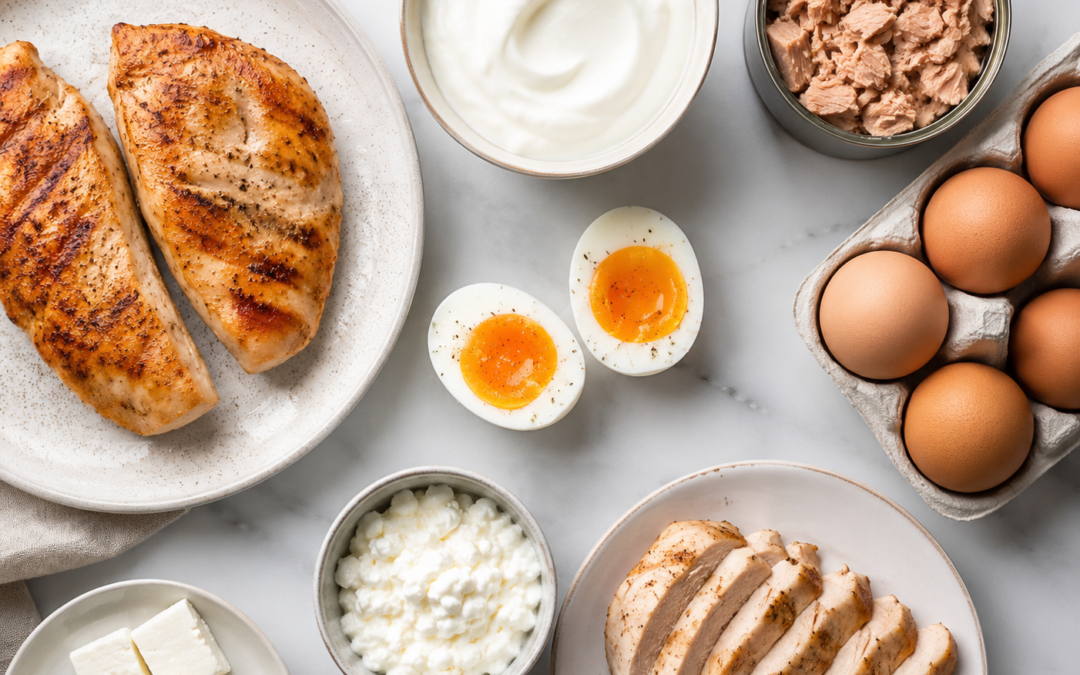
Whole food sources should form the foundation of your protein intake. They deliver not just amino acids but micronutrients, healthy fats, and dietary fibre that shakes cannot replicate. The most efficient options for building muscle available at UK supermarkets:
- Chicken breast: approximately 31g protein per 100g cooked: affordable, versatile, and high in leucine
- Eggs: 6g per large egg with an excellent amino acid profile: one of the most bioavailable protein sources available
- Greek yoghurt (0% fat): approximately 10g per 100g: widely available at Tesco, Sainsbury’s, and Asda
- Tinned tuna: approximately 24g per 100g drained: one of the most cost-effective sources in UK supermarkets
- Lean beef mince (5% fat): approximately 26g per 100g cooked: creatine-rich as well as high in protein
- Cottage cheese: approximately 11g per 100g: high in casein, making it an excellent pre-sleep protein source
- Edamame: approximately 11g per 100g: one of the better plant-based options with a complete amino acid profile
For vegetarian or vegan diets, combining complementary plant proteins, such as rice and pea, can match the MPS response of animal-based sources when total leucine content and daily intake are equivalent. Aim for the upper end of the range (2.0–2.2g/kg) to account for the lower digestibility of some plant proteins.
When a Protein Supplement Makes Sense
Protein powders do not build muscle independently. They are a convenient tool to help you hit your daily protein requirements when whole food meals are not practical. For busy people managing work, training, and life in the UK, where grabbing a prepared high-protein meal is expensive and unreliable, that convenience has real value.
Whey protein isolate is the most efficient form. It is low in fat, low in lactose, and fast-digesting meaning amino acids reach your muscles quickly post-training. A 2024 systematic review found both plant-based and whey protein equally effective at stimulating MPS when leucine content and total dose (30g+) are matched.
|
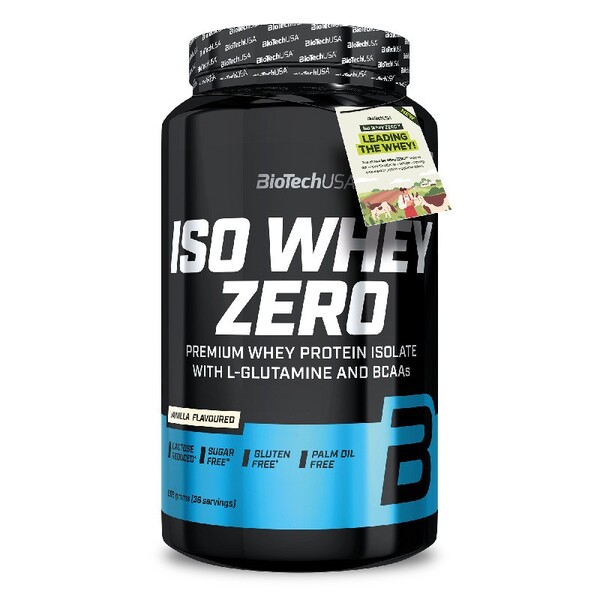
Recommended Protein Supplement BioTechUSA Iso Whey Zero, Vanilla, 908g
|
The Most Common Protein Mistakes UK Gym-Goers Make
In real life there are a lot of people who are not eating as much protein as they think they are. If you are stalling on lifts or not seeing body composition changes despite consistent training, your protein intake is one of the first things worth auditing:
- Underestimating intake: A chicken sandwich from Pret, a protein bar at 3pm, and a light dinner does not hit 160g. Most people tracking for the first time find they are hitting 60–80g on ordinary days. Use MyFitnessPal for one week to get an accurate baseline.
- Front-loading or back-loading: Eating very little protein at breakfast and lunch then trying to hit your target at dinner is inefficient. Your body can use roughly 30–40g per meal to drive MPS. Spread intake across 3–4 meals for better results.
- Relying entirely on supplements: Shakes are a top-up, not a foundation. Whole food protein sources deliver leucine alongside micronutrients — zinc, iron, B12, magnesium — that matter for recovery and performance.
- Ignoring total calories: Protein targets do not exist in isolation. If you are not eating enough total calories to support training and recovery, even optimal protein intake will not produce the muscle growth you are after. A surplus of 200–400 calories above maintenance is typically recommended for lean muscle gain.
- Eating more protein to compensate for poor training: Protein supports muscle growth triggered by training. If progressive overload is not happening in the gym, additional protein will not compensate. Both inputs need to be in place simultaneously.
Frequently Asked Questions
How much protein do I need per day to build muscle?
The evidence-based recommendation is 1.6–2.2g of protein per kilogram of bodyweight per day. For most UK lifters training 3–5 times per week, 1.8–2.0g/kg is the practical and effective protein target for muscle gain. An 80kg person should aim for approximately 144–160g daily, spread across 3–4 meals.
Can you eat too much protein?
Consuming protein above the effective range is not harmful for healthy individuals; excess is metabolised for energy. However, it offers no additional muscle-building benefit once you are consistently hitting your daily protein requirements of 1.6–2.2g/kg. NHS guidance recommends moderation and a varied diet.
Does protein timing matter for muscle growth?
Total daily intake matters far more than timing. That said, distributing protein across 3–5 meals and consuming a protein-rich meal within a few hours of training are both beneficial practices that most people find easy to implement without disrupting their day.
Is whey protein better than food sources?
Not inherently. Whole food sources — chicken, eggs, fish, Greek yoghurt — are at least as effective at stimulating MPS and carry additional micronutrient benefits. Whey protein is a convenient, fast-digesting supplement that helps you hit your daily protein intake for muscle growth when whole food meals are not practical. Use both in combination.
How much protein can my body absorb in one meal?
The old idea that your body can only absorb 30g of protein per meal isn’t quite right. You absorb almost all of it but the real question is how much your muscles can actually use in one sitting to grow. For most people that’s roughly 30–40g, which is why spreading meals out works better than front-loading everything at dinner.
What if I follow a vegetarian or vegan diet?
Plant-based protein is entirely viable for building muscle, provided you are mindful of leucine content and total daily intake. Soy, edamame, tempeh, and quinoa offer complete amino acid profiles. Combining rice and pea protein produces a leucine-rich blend comparable to whey when doses are matched. Aim towards the upper end of the range (2.0–2.2g/kg) to account for lower digestibility.
How long before I see results from hitting my protein target?
Noticeable changes in muscle mass typically take 8–12 weeks of consistent training and adequate nutrition to become visible. Strength improvements and better recovery are often noticeable within the first 2–4 weeks. Consistency over months beats perfection over days.
Should I eat protein before or after training?
Both are beneficial. If you train fasted or first thing in the morning, a protein-rich meal or shake within 1–2 hours post-training is sensible. If you train in the evening after eating well during the day, the urgency around the post-workout window is significantly reduced. Focus on total daily protein intake first, timing second.
Continue Reading: More Guides from the Stronger & Leaner Hub
Now you have your protein target dialled in, these guides cover the next steps in building a complete, evidence-based approach to strength and muscle:
- Creatine Explained: Benefits, Dosage & Common Myths (UK Guide)
- Whey vs Casein vs Isolate: Which Protein Powder Is Right for You? — [COMING SOON]
- Progressive Overload: The Science-Backed Method — [COMING SOON]
For a complete overview of building strength and lean muscle, visit the Stronger & Leaner hub
Browse the full range of evidence-backed supplements at the Stronger & Leaner supplement range