
Many women and people who menstruate notice fluctuations in energy, strength, mood, and recovery across the menstrual cycle. Rather than fighting these shifts, you can work with them by adjusting training intensity, nutrition, and recovery strategies across the phases. This blog summarises current research about how each part of the cycle might affect exercise and offers practical guidance on exertion, self-care, and supplements that may help. Always listen to your body and consult a health professional if needed.
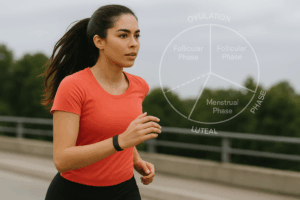
The Menstrual Cycle Phases
| Phase | Approximate Days | Hormonal Trend | Common Symptoms |
| Menstrual | Day 1–5/7 | Low oestrogen, low progesterone | Fatigue, cramping, lower energy |
| Follicular | Day 6–13 | Rising oestrogen, low progesterone | Rising energy, better recovery |
| Ovulation | Day 14 | Oestrogen peak, LH surge | Potential peak in strength/power |
| Luteal | Day 15–28 | Progesterone high then drops | Fatigue, cravings, PMS symptoms |
What the Science Says
Evidence suggests that the menstrual cycle influences performance, fatigue, substrate use, and recovery:
Iron deficiency is more common in menstruating women, especially with heavy bleeding or intense training. Iron supplementation has been shown to increase haemoglobin and improve endurance performance (SOURCE)
Low iron negatively impacts endurance, but supplementation improves VO₂max and reduces fatigue (SOURCE).
Many women report feeling performance reduced during menstruation, but exercise can also help reduce symptoms (SOURCE).
Practical Training Guidance
Menstrual (Days 1–5): Focus on light to moderate activity like walking, yoga, and mobility.
Follicular (Days 6–13): Energy rises – increase intensity with strength training and intervals.
Ovulation (~Day 14): Potential peak – best for maximal lifts, sprints, or high output work.
Luteal (Days 15–28): Reduce volume/intensity, maintain strength, increase recovery focus.
Nutrition, Supplements & Self-Care  woman takes her daily supplements[/caption]
Iron: Support through lean red meat, legumes, spinach, or supplementation if tested low.
Carbohydrates: Increase around workouts, especially in luteal phase
Protein: 1.2–2.2 g/kg daily for recovery and muscle support.
Magnesium: May reduce cramps in luteal/pre-menstrual days.
Omega-3s & anti-inflammatory foods: Support recovery and reduce cramps.
Hydration & electrolytes: Vital especially during luteal phase.
Recovery & Self-Care Tips
Prioritise sleep quality — hormonal fluctuations can impact sleep, especially luteal / PMS days
Use active recovery (walks, stretching, mobility) during lower-energy days
Heat, massage, foam rolling — especially during cramp days
Track symptoms (pain, mood, fatigue) in a journal or app to correlate with training and adjust
Consider period pain or flow‑friendly clothing / supports if training during bleeding days
Cycle Tracking Apps 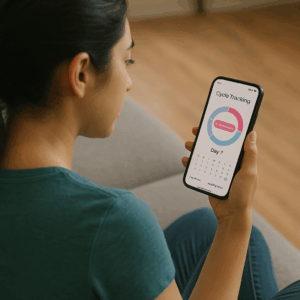
Here are a few apps you can download that offer tracking cycles and further information:
FitrWoman (athlete-focused)
Dr Stacy Sims (@drstacysims)
Dr Jen Gunter (@drjengunter)
Lexi Moriarty, MS, RD (@fueledandbalanced.dietitian)
Mindi Pelz (@drmindypelz)
Conclusion
Your menstrual cycle can influence exercise, but instead of being a barrier, it can become a roadmap to optimise training, nutrition, and recovery. Track your cycle, listen to your body, and adapt intensity accordingly. Supplements like iron, magnesium, and omega-3s can support you, but professional guidance is recommended.